Wax currant
Ribes cereum
Wax currant (Ribes cereum) is a Colorado-native shrub suited to the Colorado Front Range. It matures to about 3–5 ft tall and 3–4 ft wide, needs low water, and prefers partial shade. Pink-white tube flowers attract hummingbirds; red waxy fruits sparse, bird food only.
Colorado nativeOn the CSU listlow water3–5 ft tall and 3–4 ft wideXeric / water-wiseZones 2–3 (keep it back from the house)Deer-resistant
Photos
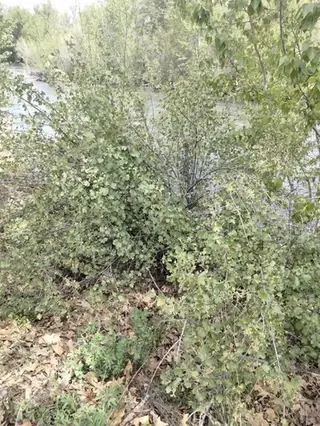
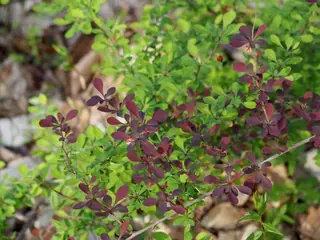
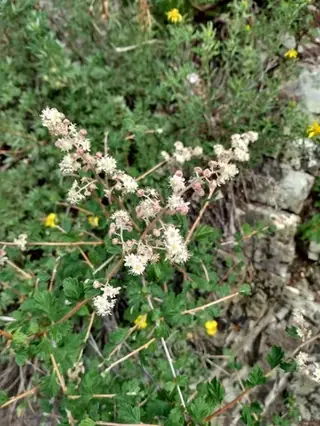
- Photo 1: "File:Wax currant Ribes cereum N of Forester Pass.jpg" by Dcrjsr is licensed under CC BY 3.0. To view a copy of this license, visit https://creativecommons.org/licenses/by/3.0.
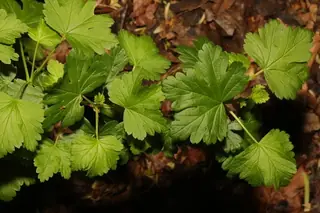
- Photo 2: "Ribes cereum - south of Tumalo Park" by UpdateNerd is marked with CC0 1.0. To view the terms, visit https://creativecommons.org/publicdomain/zero/1.0/deed.en/.
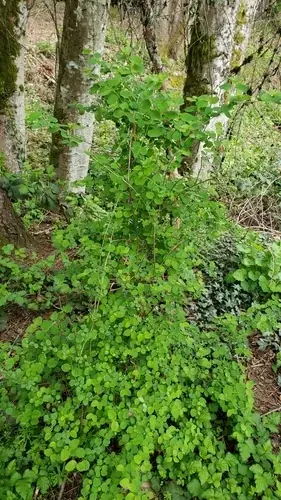
- Photo 3: "Ribes cereum bush-4-19-04" by Thayne Tuason is licensed under CC BY-SA 4.0. To view a copy of this license, visit https://creativecommons.org/licenses/by-sa/4.0/.
- Photo 4: (c) Christine Laney, some rights reserved (CC BY)
- Photo 5: "Ribes cereum" by mmmavocado is licensed under CC BY 2.0. To view a copy of this license, visit https://creativecommons.org/licenses/by/2.0/.
- Photo 6: Thayne Tuason, Wikimedia Commons (CC-BY-SA)
At a glance
Will it survive here?
- Hardiness zones
- USDA 2–8
- Water needs
- low water
- Sun
- Best in partial shade.
- Soil
- loam, sandy, well drained only
- Soil pH
- 6.0–8.0
- Hail tolerance
- moderate
- Wind tolerance
- moderate
- Salt tolerance
- low
- Firewise (defensible space)
- Zones 2–3 (keep it back from the house)
- Site uses
- Slopes & erosion control, Dry shade under conifers
How big, what shape?
- Mature size
- 3–5 ft tall and 3–4 ft wide
- Planting spacing
- ~4 ft apart (3 ft for a hedge/screen)
- Growth rate
- Moderate
What it looks like, and when
- Foliage
- Deciduous
What it will do to your yard
- Hedge use
- Informal hedge or screen
Who else benefits
- Pollinator value
- high
- Deer
- Generally deer-resistant
- Colorado native
- Yes
- Native ecoregion
- foothills, montane
Things to know before you plant
- Messy dropIt drops messy fruit, pods, or litter, so keep it off patios, walks, and pool decks.
Planting & establishment
Drought-tolerant CO native; tolerates dry shade under pines.
- Pruning: light.
- Fruit: wildlife (birds/wildlife).
Frequently asked questions
- Is Wax currant good for the Colorado Front Range?
- Yes, Wax currant is a well-suited shrub for Colorado's Front Range.
- What should I know before planting Wax currant?
- The main things to know: It drops messy fruit, pods, or litter, so keep it off patios, walks, and pool decks.
- How big does Wax currant get?
- It matures to about 3–5 ft tall and 3–4 ft wide.
- How far apart do I plant Wax currant?
- Space Wax currant about 4 ft apart for a full, natural form, or about 3 ft apart for a faster hedge or screen.
- Is Wax currant hardy on the Front Range?
- Wax currant is hardy in USDA 2–8. The Colorado Front Range spans roughly USDA 4b–6a, so it is well within range.
- How much water does Wax currant need?
- It needs low water once established.
- How fast does Wax currant grow?
- Wax currant is a moderate-growing shrub. Growth rate depends on water and site conditions on the Front Range.
- Is Wax currant native to Colorado?
- Yes. It is a Colorado native.
- Is Wax currant deer-resistant?
- Wax currant is generally considered deer-resistant, though no plant is deer-proof when browse pressure is high.
- Is Wax currant a good firewise plant near the house?
- Wax currant is suitable in defensible-space zones 2–3, best kept back from the house rather than in the area right against the structure. This is general suitability guidance based on CSU Extension firewise plant lists, not a guarantee that any plant won't burn, a well-irrigated, well-maintained plant is the goal. Follow CSU Extension defensible-space guidance and check with your local fire district before planting in the wildland-urban interface.
- Is Wax currant a good hedge plant?
- Yes, as an informal hedge. Wax currant works best as a relaxed hedge or screen kept to its natural form rather than sheared into a tight box.