Smoke bush / smoke tree
Cotinus coggygria
Smoke bush / smoke tree (Cotinus coggygria) is a shrub suited to the Colorado Front Range. It matures to about 10–15 ft tall and 10–15 ft wide, needs low to medium water, and prefers full sun. Smoky pink flower-fluff in summer; brilliant burgundy/red fall color. Purple-foliaged cultivars are popular.
On the CSU listlow to medium water10–15 ft tall and 10–15 ft wideXeric / water-wiseZone 3 only (site it well away from structures)Deer-resistant
Photos
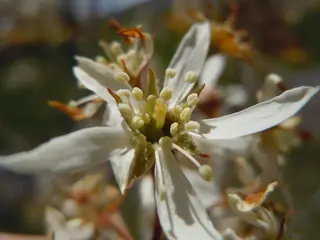
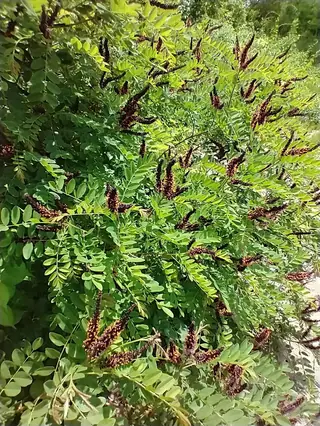
- Photo 1: "Cotinus coggygria Скумпия кожевенная European smoketree" by LIght Dim is marked with CC0 1.0. To view the terms, visit https://creativecommons.org/publicdomain/zero/1.0/deed.en.
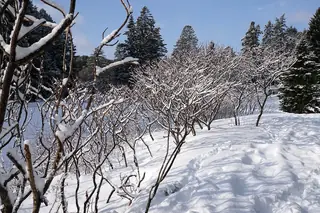
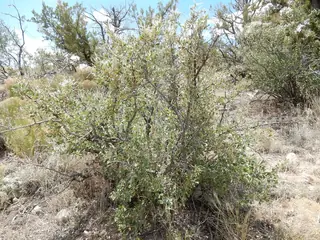
- Photo 2: "Скумпия кожевенная European smoketree (Cotinus coggygria)" by LIght Dim is marked with CC0 1.0. To view the terms, visit https://creativecommons.org/publicdomain/zero/1.0/deed.en.
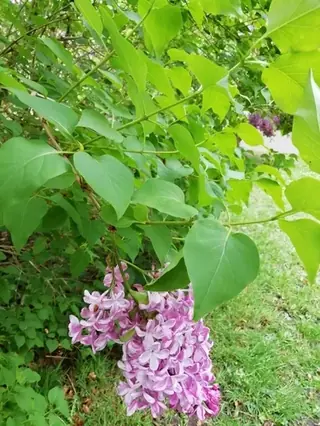
- Photo 3: "Cotinus coggygria 'Royal Purple'" by wallygrom is licensed under CC BY-SA 2.0. To view a copy of this license, visit https://creativecommons.org/licenses/by-sa/2.0/.
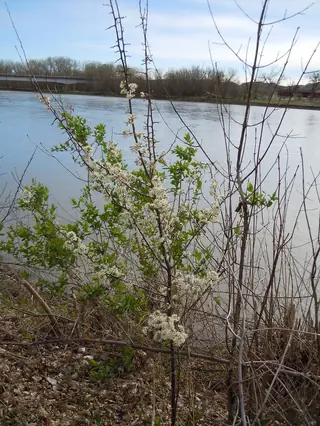
- Photo 4: "Cotinus coggygria 003" by Kor!An (Андрей Корзун) is licensed under CC BY-SA 3.0. To view a copy of this license, visit https://creativecommons.org/licenses/by-sa/3.0/.
- Photo 5: "Cotinus coggygria (Smoke Tree)" by wallygrom is licensed under CC BY-SA 2.0. To view a copy of this license, visit https://creativecommons.org/licenses/by-sa/2.0/.
- Photo 6: "Cotinus coggygria 'Young Lady'" by wallygrom is licensed under CC BY-SA 2.0. To view a copy of this license, visit https://creativecommons.org/licenses/by-sa/2.0/.
At a glance
Will it survive here?
- Hardiness zones
- USDA 4–8
- Water needs
- low to medium water
- Sun
- Best in full sun.
- Soil
- loam, sandy
- Soil pH
- 6.0–7.8
- Hail tolerance
- moderate
- Wind tolerance
- moderate
- Salt tolerance
- moderate
- Firewise (defensible space)
- Zone 3 only (site it well away from structures)
How big, what shape?
- Mature size
- 10–15 ft tall and 10–15 ft wide
- Planting spacing
- ~15 ft apart (10 ft for a hedge/screen)
- Growth rate
- Moderate
What it looks like, and when
- Bloom time
- early summer
- Bloom color
- pink
- Fall color
- Red, orange, purple
- Foliage
- Deciduous
Who else benefits
- Pollinator value
- low
- Deer
- Generally deer-resistant
- Colorado native
- No
Planting & establishment
Water weekly first summer. Sharp drainage is critical.
Frequently asked questions
- Is Smoke bush / smoke tree good for the Colorado Front Range?
- Yes, Smoke bush / smoke tree is a well-suited shrub for Colorado's Front Range.
- How big does Smoke bush / smoke tree get?
- It matures to about 10–15 ft tall and 10–15 ft wide.
- How far apart do I plant Smoke bush / smoke tree?
- Space Smoke bush / smoke tree about 15 ft apart for a full, natural form, or about 10 ft apart for a faster hedge or screen.
- Is Smoke bush / smoke tree hardy on the Front Range?
- Smoke bush / smoke tree is hardy in USDA 4–8. The Colorado Front Range spans roughly USDA 4b–6a, so it is well within range.
- How much water does Smoke bush / smoke tree need?
- It needs low to medium water once established.
- How fast does Smoke bush / smoke tree grow?
- Smoke bush / smoke tree is a moderate-growing shrub. Growth rate depends on water and site conditions on the Front Range.
- What color does Smoke bush / smoke tree turn in fall?
- Smoke bush / smoke tree turns red, orange, and purple in autumn. Fall color intensity varies with the season and site on the Front Range.
- Is Smoke bush / smoke tree native to Colorado?
- No. It is not a Colorado native, but it grows well on the Front Range.
- Is Smoke bush / smoke tree deer-resistant?
- Smoke bush / smoke tree is generally considered deer-resistant, though no plant is deer-proof when browse pressure is high.
- Is Smoke bush / smoke tree a good firewise plant near the house?
- Smoke bush / smoke tree is suitable in defensible-space zone 3 only, site it well away from structures. This is general suitability guidance based on CSU Extension firewise plant lists, not a guarantee that any plant won't burn, a well-irrigated, well-maintained plant is the goal. Follow CSU Extension defensible-space guidance and check with your local fire district before planting in the wildland-urban interface.