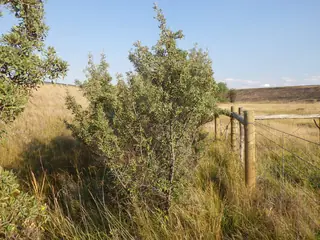
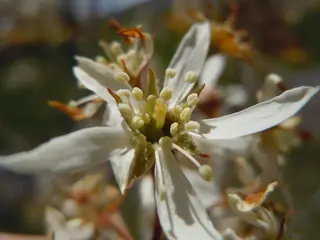
Russian olive
Elaeagnus angustifolia
Russian olive (Elaeagnus angustifolia) is a shrub that grows well here and should not be planted. It matures to about 15–30 ft tall and 15–25 ft wide, needs low to medium water, and prefers full sun. DO NOT PLANT. Looks tough and silver-leafed but is an ecological disaster on Front Range waterways.
low to medium water15–30 ft tall and 15–25 ft wideXeric / water-wiseInvasive in Colorado
Photos
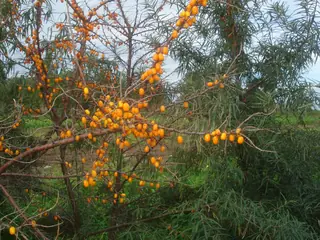
- Photo 1: "Elaeagnus-angustifolia-habit" by No machine-readable author provided. Sten assumed (based on copyright claims). is licensed under CC BY-SA 3.0. To view a copy of this license, visit https://creativecommons.org/licenses/by-sa/3.0/.
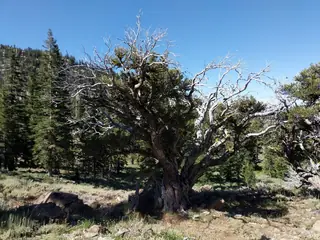
- Photo 2: Katrin Schneider / korina.info
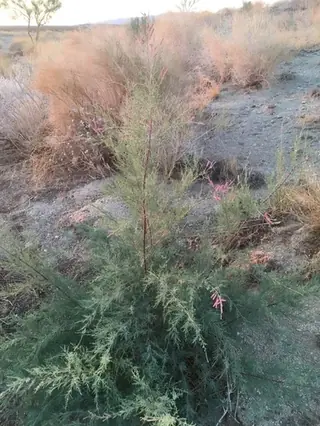
- Photo 3: "Elaeagnus angustifolia (habitus)" by Le.Loup.Gris is licensed under CC BY-SA 3.0. To view a copy of this license, visit https://creativecommons.org/licenses/by-sa/3.0/.
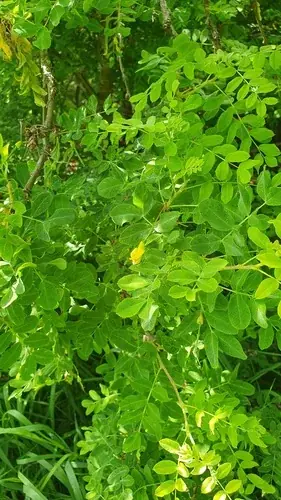
- Photo 4: (c) Olena V. Vakarenko, some rights reserved (CC BY)
- Photo 5: "Russian Olive (Elaeagnus angustifolia)" by GlacierNPS is marked with Public Domain Mark 1.0. To view the terms, visit https://creativecommons.org/publicdomain/mark/1.0/.
- Photo 6: (c) Clément Maouche, some rights reserved (CC BY)
At a glance
Will it survive here?
- Hardiness zones
- USDA 2–7
- Water needs
- low to medium water
- Sun
- Best in full sun.
- Soil
- clay, sandy, loam
- Soil pH
- 6.5–8.5
- Hail tolerance
- moderate
- Wind tolerance
- high
- Salt tolerance
- high
How big, what shape?
- Mature size
- 15–30 ft tall and 15–25 ft wide
- Planting spacing
- ~25 ft apart (18 ft for a hedge/screen)
- Growth rate
- Moderate
What it looks like, and when
- Foliage
- Deciduous
Who else benefits
- Deer
- Not deer-resistant
- Colorado native
- No
Things to know before you plant
- Invasive, do not plantListed on Colorado's noxious weed list (List B). Russian olive aggressively colonizes riparian corridors across the Front Range, replacing native cottonwoods and willows. Removal is required by some counties.
- ThornyIt is thorny, so site it away from paths, seating, and play areas.
Frequently asked questions
- Is Russian olive good for the Colorado Front Range?
- No. Russian olive is listed as invasive in Colorado and should not be planted. Listed on Colorado's noxious weed list (List B). Russian olive aggressively colonizes riparian corridors across the Front Range, replacing native cottonwoods and willows. Removal is required by some counties.
- What should I know before planting Russian olive?
- The main things to know: Listed on Colorado's noxious weed list (List B). Russian olive aggressively colonizes riparian corridors across the Front Range, replacing native cottonwoods and willows. Removal is required by some counties. It is thorny, so site it away from paths, seating, and play areas.
- How big does Russian olive get?
- It matures to about 15–30 ft tall and 15–25 ft wide.
- How far apart do I plant Russian olive?
- Space Russian olive about 25 ft apart for a full, natural form, or about 18 ft apart for a faster hedge or screen.
- Is Russian olive hardy on the Front Range?
- Russian olive is hardy in USDA 2–7. The Colorado Front Range spans roughly USDA 4b–6a, so it is well within range.
- How much water does Russian olive need?
- It needs low to medium water once established.
- How fast does Russian olive grow?
- Russian olive is a moderate-growing shrub. Growth rate depends on water and site conditions on the Front Range.
- Is Russian olive native to Colorado?
- No. It is not a Colorado native, but it grows well on the Front Range.
- Is Russian olive deer-resistant?
- No. Russian olive is not considered deer-resistant and may need protection where deer browse.