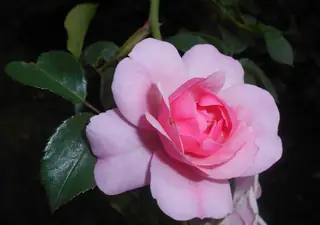
Koko Loko rose
Rosa 'Koko Loko'
Koko Loko rose (Rosa 'Koko Loko') is a shrub suited to the Colorado Front Range. It matures to about 3–4 ft tall and 3 ft wide, needs medium water, and prefers full sun. On the tender side: hardy to about zone 6, so on the colder Front Range give it a sheltered, warm spot and real winter protection.
Not on an authoritative Colorado list. Koko Loko rose grows on the Front Range, but it is not on the CSU Extension, Plant Select, or Colorado Native Plant Society lists our recommended plants come from. We include it for coverage because people grow it here and ask about it. Read the guidance below as our own honest take, not a formal recommendation.
medium water3–4 ft tall and 3 ft wide
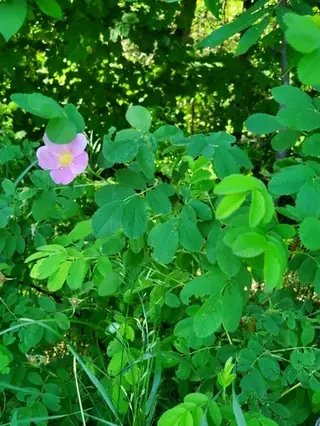
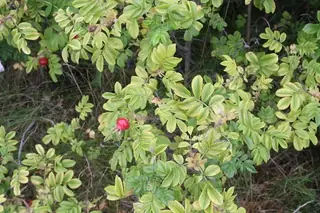
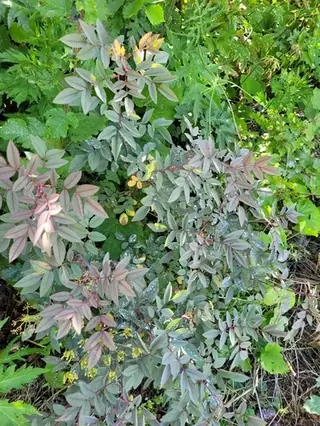
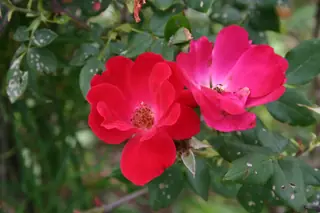
Photos
Ruff tuff cream puff, Wikimedia Commons (CC0)
At a glance
Will it survive here?
- Hardiness zones
- USDA 6–9
- Water needs
- medium water
- Sun
- Best in full sun.
- Soil
- clay, loam, sandy
- Soil pH
- 6.0–7.5
- Hail tolerance
- moderate
- Wind tolerance
- moderate
- Salt tolerance
- low
How big, what shape?
- Mature size
- 3–4 ft tall and 3 ft wide
- Planting spacing
- ~3 ft apart (2 ft for a hedge/screen)
- Growth rate
- Moderate
What it looks like, and when
- Bloom time
- early summer, mid summer, late summer, early fall
- Bloom color
- brown, purple
- Bloom length
- Reblooms
- Foliage
- Deciduous
What it will do to your yard
- Hedge use
- Informal hedge or screen
Who else benefits
- Pollinator value
- low
- Deer
- Not deer-resistant
- Colorado native
- No
Things to know before you plant
- ThornyIt is thorny, so site it away from paths, seating, and play areas.
Common problems on the Front Range
- Aphids
- Blackspot and powdery mildew
- Japanese beetle
These are general tendencies for this group of plants on the Front Range, not a diagnosis. Many are stress-driven and preventable with good siting and watering. For a specific plant or an active problem, consult a certified arborist or your local CSU Extension office.
Planting & establishment
Give it deep, regular water the first two seasons and steady moisture after; mulch to keep the roots cool and moist.
- Pruning: moderate.
Frequently asked questions
- Is Koko Loko rose good for the Colorado Front Range?
- Yes, Koko Loko rose is a well-suited shrub for Colorado's Front Range.
- What should I know before planting Koko Loko rose?
- The main things to know: It is thorny, so site it away from paths, seating, and play areas.
- How big does Koko Loko rose get?
- It matures to about 3–4 ft tall and 3 ft wide.
- How far apart do I plant Koko Loko rose?
- Space Koko Loko rose about 3 ft apart for a full, natural form, or about 2 ft apart for a faster hedge or screen.
- Is Koko Loko rose hardy on the Front Range?
- Koko Loko rose is hardy in USDA 6–9. The Colorado Front Range spans roughly USDA 4b–6a, so it is at its cold edge here. Site it in a warm microclimate and protect young plants.
- How much water does Koko Loko rose need?
- It needs medium water once established.
- How fast does Koko Loko rose grow?
- Koko Loko rose is a moderate-growing shrub. Growth rate depends on water and site conditions on the Front Range.
- Is Koko Loko rose native to Colorado?
- No. It is not a Colorado native, but it grows well on the Front Range.
- Is Koko Loko rose deer-resistant?
- No. Koko Loko rose is not considered deer-resistant and may need protection where deer browse.
- Is Koko Loko rose prone to pests or disease on the Front Range?
- Koko Loko rose can be affected by aphids and other issues common to this group on the Front Range. These are general tendencies, not a diagnosis, many are stress-driven and preventable with good siting and watering. For a specific plant or an active problem, consult a certified arborist or CSU Extension.
- Is Koko Loko rose a good hedge plant?
- Yes, as an informal hedge. Koko Loko rose works best as a relaxed hedge or screen kept to its natural form rather than sheared into a tight box.
- How long does Koko Loko rose bloom?
- Koko Loko rose reblooms through the season, especially if you deadhead spent flowers on the Front Range. Bloom timing shifts a week or two with elevation and spring weather.