Yellow clematis
Clematis tibetana
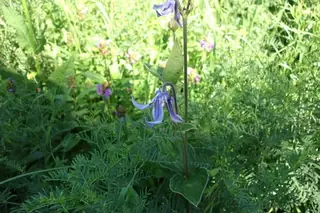
Yellow clematis (Clematis tibetana) is a perennial suited to the Colorado Front Range. It matures to about 72–144 in tall and 36–60 in wide, needs low to medium water, and prefers full sun to partial shade. A vigorous climber hung with nodding, thick-petaled yellow lanterns from midsummer into fall, followed by silky silver seedheads. Easy and drought-tough. Seen at Denver Botanic Gardens.
At a glance
Will it survive here?
- Hardiness zones
- USDA 5–9
- Water needs
- low to medium water
- Sun
- Best in full sun; tolerates partial shade.
- Soil
- clay, loam, sandy
- Soil pH
- 6.0–8.0
- Hail tolerance
- moderate
- Wind tolerance
- moderate
- Salt tolerance
- moderate
How big, what shape?
- Mature size
- 72–144 in tall and 36–60 in wide
- Planting spacing
- ~42–60 in apart
What it looks like, and when
- Bloom time
- mid summer, late summer, early fall
- Bloom color
- yellow
- Bloom length
- Long (several weeks)
- Foliage
- Deciduous
Who else benefits
- Pollinator value
- moderate
- Deer
- Generally deer-resistant
- Colorado native
- No
Things to know before you plant
- Toxic to dogsConsidered toxic to dogs, so keep pets away from it and check with your vet.
- Spreads aggressivelySelf-sows readily; its relative Clematis orientalis is a Colorado noxious weed, so cut off the fluffy seedheads before they scatter.
Common problems on the Front Range
- Clematis wilt
- Aphids
These are general tendencies for this group of plants on the Front Range, not a diagnosis. Many are stress-driven and preventable with good siting and watering. For a specific plant or an active problem, consult a certified arborist or your local CSU Extension office.
Planting & establishment
Give it full sun and something to climb; drought-tolerant once established. Cut it back hard in late winter, as it blooms on new growth.
Frequently asked questions
- Is Yellow clematis good for the Colorado Front Range?
- Yes, Yellow clematis is a well-suited perennial for Colorado's Front Range.
- What should I know before planting Yellow clematis?
- The main things to know: Considered toxic to dogs, so keep pets away from it and check with your vet. Self-sows readily; its relative Clematis orientalis is a Colorado noxious weed, so cut off the fluffy seedheads before they scatter.
- How big does Yellow clematis get?
- It matures to about 72–144 in tall and 36–60 in wide.
- How far apart do I plant Yellow clematis?
- Space Yellow clematis about 42 in apart for a faster, fuller bed, or up to 60 in apart for a looser planting.
- Is Yellow clematis hardy on the Front Range?
- Yellow clematis is hardy in USDA 5–9. The Colorado Front Range spans roughly USDA 4b–6a, so it is at its cold edge here. Site it in a warm microclimate and protect young plants.
- How much water does Yellow clematis need?
- It needs low to medium water once established.
- Is Yellow clematis safe for dogs?
- No. Yellow clematis is considered toxic to dogs. Keep pets away and check with your vet.
- Is Yellow clematis deer-resistant?
- Yellow clematis is generally considered deer-resistant, though no plant is deer-proof when browse pressure is high.
- Is Yellow clematis prone to pests or disease on the Front Range?
- Yellow clematis can be affected by clematis wilt and other issues common to this group on the Front Range. These are general tendencies, not a diagnosis, many are stress-driven and preventable with good siting and watering. For a specific plant or an active problem, consult a certified arborist or CSU Extension.
- How long does Yellow clematis bloom?
- Yellow clematis blooms for several weeks, a long-season performer on the Front Range. Bloom timing shifts a week or two with elevation and spring weather.