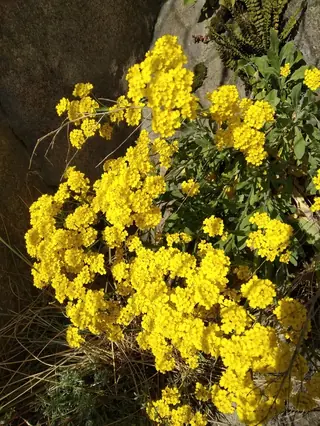
Sun rose / rock rose
Helianthemum nummularium
Sun rose / rock rose (Helianthemum nummularium) is a groundcover suited to the Colorado Front Range. It matures to about 6–12 in tall and 18–30 in wide, needs low water, and prefers full sun. Wide color range. Drought-tough mound; shear after bloom for tidy form.
On the CSU listlow water6–12 in tall and 18–30 in wideXeric / water-wiseZones 1–3 (can be planted near the house)Deer-resistant
Photos
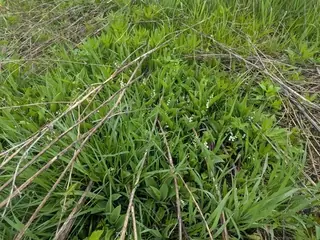
- Photo 1: (c) Jacek Pietruszewski, some rights reserved (CC BY)
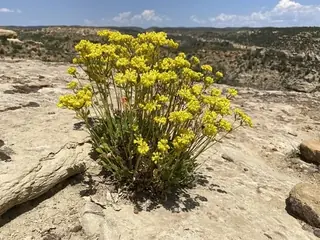
- Photo 2: (c) Wolfgang Jauch, some rights reserved (CC BY)
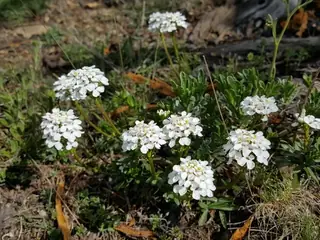
- Photo 3: (c) Björn Sothmann, some rights reserved (CC BY-SA), uploaded by Björn Sothmann
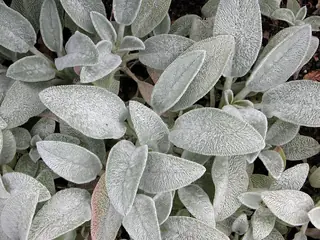
- Photo 4: (c) Gilles San Martin, some rights reserved (CC BY-SA), uploaded by Gilles San Martin
At a glance
Will it survive here?
- Hardiness zones
- USDA 5–8
- Water needs
- low water
- Sun
- Best in full sun.
- Soil
- sandy, well drained only
- Soil pH
- 6.5–8.0
- Hail tolerance
- moderate
- Wind tolerance
- moderate
- Salt tolerance
- moderate
- Firewise (defensible space)
- Zones 1–3 (can be planted near the house)
- Site uses
- Slopes & erosion control, Hot south- or west-facing walls
How big, what shape?
- Mature size
- 6–12 in tall and 18–30 in wide
- Growth habit
- Mounding
- Planting spacing
- ~21–30 in apart
What it looks like, and when
- Bloom time
- late spring, early summer
- Bloom color
- yellow, pink, orange, red, white
- Foliage
- Evergreen
- Winter cover
- Partial winter cover
What it will do to your yard
- Foot traffic
- No foot traffic
Who else benefits
- Pollinator value
- high
- Deer
- Generally deer-resistant
- Colorado native
- No
Using Sun rose / rock rose as a groundcover
Sun rose / rock rose grows in low mounds. It fills in to a moderately dense cover. On a slope it helps knit the soil together and control erosion.
Planting & establishment
Water deeply 1×/week first summer to establish. Minimal water after, needs sharp drainage and tolerates true xeric conditions.
Frequently asked questions
- Is Sun rose / rock rose good for the Colorado Front Range?
- Yes, Sun rose / rock rose is a well-suited groundcover for Colorado's Front Range.
- How big does Sun rose / rock rose get?
- It matures to about 6–12 in tall and 18–30 in wide.
- How far apart do I plant Sun rose / rock rose?
- Space Sun rose / rock rose about 21 in apart for a faster, fuller cover, or up to 30 in apart for a looser planting.
- Is Sun rose / rock rose hardy on the Front Range?
- Sun rose / rock rose is hardy in USDA 5–8. The Colorado Front Range spans roughly USDA 4b–6a, so it is at its cold edge here. Site it in a warm microclimate and protect young plants.
- How much water does Sun rose / rock rose need?
- It needs low water once established.
- Is Sun rose / rock rose native to Colorado?
- No. It is not a Colorado native, but it grows well on the Front Range.
- Is Sun rose / rock rose deer-resistant?
- Sun rose / rock rose is generally considered deer-resistant, though no plant is deer-proof when browse pressure is high.
- Is Sun rose / rock rose a good firewise plant near the house?
- Sun rose / rock rose is a lower-fuel choice suitable in defensible-space zones 1–3, it can be planted near the house when kept well irrigated and maintained. This is general suitability guidance based on CSU Extension firewise plant lists, not a guarantee that any plant won't burn, a well-irrigated, well-maintained plant is the goal. Follow CSU Extension defensible-space guidance and check with your local fire district before planting in the wildland-urban interface.
- Can you walk on Sun rose / rock rose?
- Sun rose / rock rose isn't meant for foot traffic, site it where you won't need to walk across it.
- Will Sun rose / rock rose spread or stay put?
- Sun rose / rock rose is mounding. Give it room to fill in and edit the edges to keep it where you want it.
- Does Sun rose / rock rose stay green in winter?
- Sun rose / rock rose keeps partial cover through Front Range winters.
- Is Sun rose / rock rose good for a slope?
- Yes. Sun rose / rock rose helps hold soil on Front Range slopes and control erosion once its roots knit in.